Why Smart Businesses Are Combining Payment Processing and Marketing Into One Platform
Running a business has become more complicated than ever.
Business owners are expected to manage sales, customer relationships, payment systems, marketing campaigns, online reputation, customer communication, analytics, and growth strategies all while trying to maintain profitability.
The problem?
Most businesses manage these functions using separate tools.
One system handles payments
Another manages customer relationships
Another sends emails
Another handles reviews
Another manages automation
Over time, these disconnected systems create operational inefficiencies, higher costs, fragmented customer experiences, and lost growth opportunities.
Smart businesses are beginning to realize something important:
Payments and growth should not operate separately. They should work together.
The Hidden Cost of Using Multiple Business Platforms

Many businesses do not realize how much disconnected systems actually cost them.
The cost is not only measured in software subscriptions.
It appears in wasted time, missed opportunities, duplicate work, poor customer experiences, and lost revenue.
Businesses using disconnected systems often struggle with:
Customer information scattered across multiple platforms
Limited visibility into customer behavior
Manual tasks that consume valuable hours
Higher operational costs
Delayed follow-up communication
Missed opportunities for upselling and repeat business
Difficulty measuring marketing ROI
As businesses grow, these problems become even more expensive.
Instead of building efficient systems, teams spend time trying to connect disconnected tools.
Why Payments Are No Longer Just About Processing Transactions
For years, businesses viewed payment processing as a simple operational necessity.
Accept payment
Process transaction
Move on
Today, payment data has become one of the most valuable business assets.
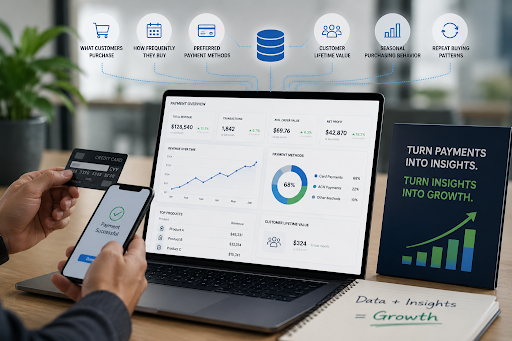
Every transaction creates valuable insights:
What customers purchase
How frequently they buy
Preferred payment methods
Customer lifetime value
Seasonal purchasing behavior
Repeat buying patterns
Businesses that connect payment processing with growth tools can transform transaction data into actionable business intelligence.
This changes payments from being a cost center into a revenue driver.
Connected Platforms Create Better Customer Experiences

Customer expectations continue to evolve.
Customers expect:
Faster payment experiences
Multiple payment options
Personalized communication
Faster responses
Seamless interactions
Disconnected systems often create friction.
For example:
A customer makes a purchase
The payment processes successfully
But the business forgets follow-up communication
No review request is sent
No retention campaign launches
No upsell opportunity is created
The transaction ends when it could have started a longer customer relationship.
Connected platforms help eliminate these gaps.
How AI Is Changing Business Operations
Artificial intelligence is rapidly changing how businesses manage growth.
Instead of relying entirely on manual processes, businesses can now automate large portions of their customer journey.
Automate Customer Communication
Businesses can automatically send follow-ups, reminders, confirmations, review requests, and nurture campaigns.
Improve Lead Management
AI can help identify high-intent leads, prioritize opportunities, and improve response times.
Create Content Faster
Businesses can generate content, campaigns, email sequences, and customer communication more efficiently.
Improve Customer Retention
Smart automation helps businesses maintain customer relationships without increasing manual workload.
Businesses that combine AI tools with payment systems create stronger workflows because customer data immediately becomes actionable.
Why Lower Processing Costs Still Matter
For many businesses, processing costs represent a significant monthly expense.
Traditional payment processing fees can quietly reduce profitability.
Modern payment platforms provide more flexibility through:
Flexible Pricing Models
Businesses can choose pricing structures that align with their operational goals.
Dual Pricing Strategies
Some businesses choose models that allow card fees to be offset while providing alternative payment incentives.
Lower-Cost Payment Methods
ACH processing can reduce transaction costs while improving cash flow predictability.
Reducing processing expenses creates additional resources that businesses can reinvest into growth.
Why Businesses Are Prioritizing Unified Platforms
Businesses increasingly want fewer systems—not more.
Unified platforms help businesses:
Improve Visibility– When payments, customer management, marketing, reviews, and automation exist in one ecosystem, decision-making becomes easier.
Reduce Operational Complexity– Fewer systems mean less training, fewer integrations, and fewer manual processes.
Improve Reporting Accuracy– Businesses gain clearer visibility into revenue, customer behavior, and performance metrics.
Scale More Efficiently– Growth becomes easier when systems are designed to work together.
The Connection Between Payments and Marketing
Many businesses still view payment processing and marketing as unrelated functions.
They are closely connected.
Payment activity creates customer behavior data.
Customer behavior data creates marketing opportunities.
Marketing opportunities create revenue.
When these systems connect, businesses can:
Launch targeted campaigns based on purchase behavior
Increase repeat purchases
Improve customer retention
Automate follow-up sequences
Personalize customer experiences
Identify higher-value customers faster
Businesses no longer need separate systems fighting against each other.
The Future of Business Growth Is Connected
The businesses growing fastest are not necessarily using more software.
They are using smarter systems.
Connected ecosystems allow businesses to:
Reduce unnecessary expenses
Improve customer experiences
Increase efficiency
Create stronger customer relationships
Make faster decisions
Scale more predictably
Payment processing is evolving beyond transactions.
It is becoming part of a larger growth strategy.
Businesses that embrace connected systems today position themselves more competitively for tomorrow.
Final Thoughts
Payments and growth should not operate in separate systems.
Businesses that combine payment processing, automation, AI tools, customer management, reputation management, and marketing create stronger foundations for long-term growth.
The question is no longer whether businesses should connect these systems.
The question is how much growth they may be losing by keeping them separate.
Ready to Simplify Payments and Accelerate Growth?
Your payment platform should do more than process transactions.
It should help reduce costs, improve customer experiences, automate growth, and create smarter business decisions.
Imagine having payments, automation, customer management, marketing tools, reputation management, and growth insights working together instead of separately.
That is where smarter business growth begins.
Ready to discover how much your business could save and how much more it could grow?
