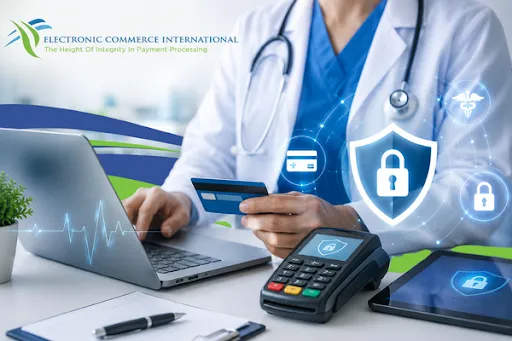
What Every Medical Practice Should Know About Payment Security and HIPAA Compliance
The healthcare industry has rapidly embraced digital transformation. Patients now expect convenient online scheduling, contactless payments, patient portals, recurring billing, and electronic invoices. While these innovations improve the patient experience, they also introduce new cybersecurity risks.
Medical practices don't just manage protected health information (PHI)—they also process sensitive financial data. Every payment transaction represents another opportunity for cybercriminals if proper security measures are not in place.
Whether you're an independent physician, dental office, chiropractic clinic, urgent care center, specialty practice, or multi-location healthcare organization, understanding the relationship between payment security and HIPAA compliance is essential for protecting your patients, maintaining trust, and reducing financial risk.
This guide explains how payment security works alongside HIPAA requirements and outlines practical steps every medical practice should take to safeguard patient information.
Why Payment Security Matters More Than Ever

Healthcare has become one of the most targeted industries for cybercrime.
Medical records contain valuable personal information, while payment systems process credit cards, debit cards, HSA/FSA cards, ACH payments, and recurring billing information. A single data breach can expose thousands of patient records and create significant financial and reputational damage.
The consequences of inadequate payment security may include:
Financial fraud
Identity theft
HIPAA investigations
Regulatory penalties
Loss of patient trust
Operational downtime
Expensive recovery costs
Patients trust healthcare providers with some of their most personal information. That trust extends beyond medical records it also includes how their payments are collected, processed, and stored.
A secure payment environment demonstrates your commitment to protecting every aspect of the patient experience.
Understanding HIPAA Compliance

The Health Insurance Portability and Accountability Act (HIPAA) establishes national standards for protecting sensitive patient health information.
Its primary purpose is to ensure that Protected Health Information (PHI) remains confidential, secure, and accessible only to authorized individuals.
HIPAA requires healthcare organizations to implement administrative, technical, and physical safeguards to protect patient information throughout its lifecycle.
Examples of PHI include:
Patient names
Medical record numbers
Treatment information
Insurance details
Diagnoses
Prescription information
Appointment history
Although payment card information itself is generally governed by PCI DSS (Payment Card Industry Data Security Standard) rather than HIPAA, many healthcare workflows connect payment information with patient records.
Examples include:
Patient portals
Medical billing software
Online payment pages
Electronic invoices
Payment links sent via email or SMS
Recurring payment systems
Because these systems often interact with patient records, medical practices should ensure both HIPAA and payment security requirements are addressed together.
A healthcare organization should meet both HIPAA requirements and PCI compliance standards to create a comprehensive security strategy.
Neither replaces the other.
Why PCI Compliance Is Important

Any medical practice that accepts credit or debit card payments should understand PCI DSS (Payment Card Industry Data Security Standard).
PCI DSS is a globally recognized set of security standards designed to protect cardholder information during payment processing.
PCI-compliant payment systems help reduce the risk of:
Card fraud
Data breaches
Stolen payment information
Unauthorized access
Financial losses
Choosing a payment processor that supports PCI compliance simplifies your practice's responsibility for protecting payment data.
Common Security Risks Facing Medical Practices
Healthcare organizations face increasingly sophisticated cyber threats.
Some of the most common risks include:
Phishing Attacks
Cybercriminals often impersonate vendors, insurance companies, or internal employees to trick staff into revealing passwords or payment information.
Ransomware
Malicious software can lock patient records and payment systems until a ransom is paid.
Healthcare organizations are among the most frequent ransomware targets because uninterrupted access to patient information is critical.
Weak Passwords
Shared logins and weak passwords remain one of the easiest ways attackers gain access to payment systems.
Insider Threats
Unauthorized employee access—whether intentional or accidental—can expose sensitive financial and patient information.
Outdated Software
Older payment terminals and billing systems often contain known vulnerabilities that hackers actively exploit.
Unsecured Networks
Public Wi-Fi and poorly secured office networks increase the risk of intercepted payment data.
Best Practices for Secure Medical Payment Processing
1. Choose a Trusted Payment Processor
Not every payment processor understands the unique needs of healthcare providers.
Choose a payment partner that offers:
PCI-compliant payment processing
End-to-end encryption
Tokenization
Fraud monitoring
Secure online payment portals
Contactless payment options
Mobile payment acceptance
Recurring billing capabilities
Working with an experienced payment provider helps reduce compliance complexity while improving the patient experience.
2. Encrypt Sensitive Data
Encryption converts payment information into unreadable data while it travels between systems.
Even if intercepted, encrypted information cannot easily be used by attackers.
Encryption should be implemented for:
Card-present transactions
Online payments
Mobile payments
Patient portals
Payment APIs
3. Use Tokenization
Tokenization replaces sensitive card information with randomly generated tokens.
Instead of storing actual credit card numbers, your payment system stores meaningless replacement values.
This significantly reduces the amount of sensitive payment information exposed during a breach.
4. Limit Employee Access
Only employees who require access to financial information should have permission to view payment systems.
Use:
Role-based permissions
Multi-factor authentication (MFA)
Strong password policies
Automatic session timeouts
Regular access audits
Limiting access greatly reduces insider risk.
5. Train Your Staff Regularly
Employees are often the first line of defense against cyber threats.
Security awareness training should cover:
Identifying phishing emails
Password management
HIPAA privacy requirements
Secure payment handling
Social engineering tactics
Reporting suspicious activity
Regular education helps prevent costly mistakes.
6. Keep Software Updated
Cybercriminals actively exploit outdated software.
Ensure that all systems receive regular updates, including:
Payment terminals
Medical billing platforms
Practice management software
Operating systems
Firewalls
Antivirus software
Software updates often include important security patches.
7. Monitor Transactions
Routine monitoring allows practices to detect unusual activity before it becomes a larger problem.
Watch for:
Duplicate payments
Unusual refund activity
Failed login attempts
Unauthorized transactions
Abnormal payment patterns
Early detection can significantly reduce financial losses.
Benefits of Secure Payment Processing
Investing in payment security offers benefits that extend beyond compliance.
Medical practices often experience:
Faster payment collection
Improved patient satisfaction
Increased patient trust
Lower fraud risk
Reduced administrative workload
Better cash flow
Simplified billing
Greater operational efficiency
Patients increasingly expect flexible, secure payment options similar to those offered by retail and banking organizations.
Meeting those expectations helps improve the overall patient experience.
How Secure Payment Solutions Improve the Patient Experience
Today's patients value convenience.
Modern payment solutions allow practices to offer:
Online bill pay
Mobile payments
Digital invoices
Contactless checkout
Recurring payment plans
Text-to-pay options
Email payment links
These features make it easier for patients to pay on time while reducing manual administrative work for your staff.
How ECI Supports Secure Healthcare Payments
Electronic Commerce International (ECI) provides secure payment processing solutions designed to help healthcare organizations simplify payment acceptance while protecting sensitive financial information.
With modern payment technology, medical practices can:
Accept payments securely in person and online
Improve payment collection
Reduce fraud risks
Streamline billing workflows
Support PCI-compliant payment processing
Enhance the patient payment experience
Whether your practice processes payments at the front desk, through a patient portal, or via recurring billing, choosing the right payment processing partner helps strengthen your overall security strategy while supporting long-term business growth.
Final Thoughts
Protecting patient information goes beyond safeguarding medical records. Every payment transaction represents another opportunity to strengthen trust and demonstrate your commitment to security.
By combining HIPAA compliance with secure payment processing, PCI-compliant technology, staff training, and ongoing cybersecurity best practices, medical practices can significantly reduce risk while improving operational efficiency and patient satisfaction.
As cyber threats continue to evolve, investing in secure payment solutions is no longer optional—it's an essential part of running a modern healthcare practice.
Partnering with an experienced payment processor like ECI can help your organization deliver secure, convenient, and reliable payment experiences while keeping patient information protected every step of the way.
