
Visa’s Friendly Fraud Rule Changes Could Help Small Businesses Reduce Chargeback Costs
For small businesses, a chargeback can mean more than simply losing the money from a transaction.
When a customer disputes a legitimate purchase, merchants may also face lost revenue, administrative work, payment processing costs, and the time required to gather documentation and respond to the dispute.
One growing challenge is friendly fraud, also known as first-party fraud. This happens when a cardholder disputes a legitimate transaction, sometimes because they do not recognize the charge, forgot about the purchase, or intentionally claim that they did not authorize it.
To address this growing problem, Visa introduced changes to its dispute process designed to make it easier for merchants to provide evidence showing that a disputed transaction was legitimate.
For small businesses, understanding these changes can be an important part of building a stronger chargeback prevention strategy.
What Is Friendly Fraud?
Friendly fraud occurs when a legitimate transaction is disputed by the cardholder.
Unlike traditional payment fraud, where a criminal may use stolen payment information, friendly fraud generally involves a transaction made by the actual cardholder.
For example, a customer may:
Forget that they made a purchase
Fail to recognize the business name on their statement
Dispute a purchase after receiving the product or service
Claim that a transaction was unauthorized
Request a chargeback instead of contacting the merchant directly
Regardless of the reason, the result can be costly for a small business.
The merchant may lose the transaction revenue while also spending valuable time researching the dispute and gathering evidence.
Why Chargebacks Matter to Small Businesses
Chargebacks can have a significant impact on a business's bottom line.
A single dispute may not seem substantial, but repeated chargebacks can quickly add up. Businesses also have to consider the operational costs associated with managing disputes.
For example, a merchant may need to locate:
Transaction records
Receipts
Order information
Customer communication
Delivery confirmation
Payment details
Previous transaction history
The more information a merchant can provide, the easier it may be to demonstrate that a transaction was legitimate.
This is particularly important for businesses that process payments online, over the phone, or through recurring billing.
How Visa’s Friendly Fraud Changes Help Merchants
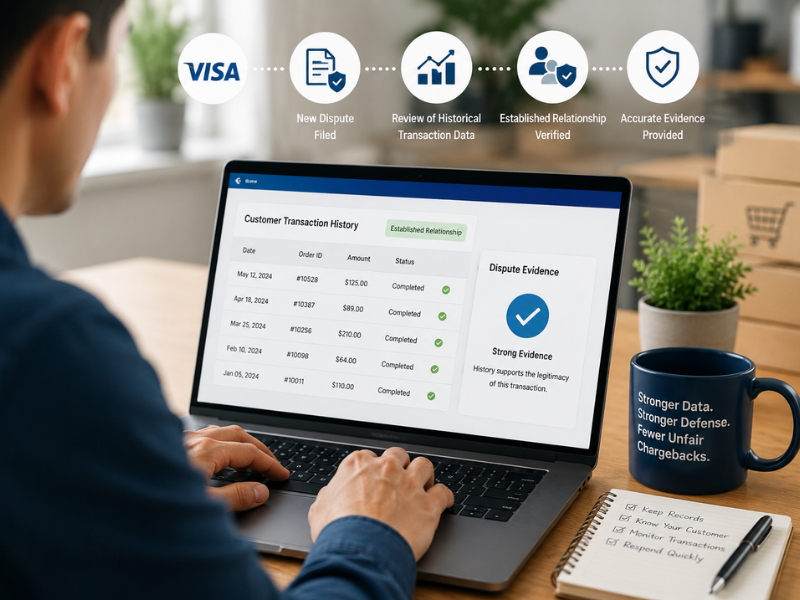
Visa's updated approach to disputes focuses on giving merchants additional ways to demonstrate an established relationship with a cardholder.
Historical transaction information can help establish that the cardholder has previously interacted with the merchant legitimately.
For example, evidence showing previous successful transactions between the same customer and business may provide additional context when a new transaction is disputed.
This type of information can help distinguish a potentially fraudulent dispute from a legitimate cardholder complaint.
The broader goal is to make the dispute process more efficient while helping merchants provide accurate evidence when they believe a chargeback is incorrect.
Better Transaction Data Can Strengthen Chargeback Protection
One of the biggest lessons for small businesses is that payment data matters.
When transaction information is organized and accessible, merchants have a stronger foundation for responding to disputes.
Businesses should consider maintaining accurate records of:
Customer transactions
Purchase dates and times
Order details
Receipts
Customer communications
Shipping and delivery information
Previous purchases
Refunds and cancellations
Payment authorization details
Having this information available can make the process of responding to a chargeback much more manageable.
It can also help businesses identify patterns that may point to recurring payment or fraud issues.
Chargeback Prevention Starts Before the Dispute
Responding to a chargeback is important, but preventing unnecessary disputes in the first place can be even better.
Clear transaction information can help customers recognize purchases on their credit or debit card statements.
Businesses can also reduce confusion by making sure customers understand:
What they are purchasing
How much they will be charged
When recurring payments will occur
How refunds work
How to contact the business about a problem
For online businesses, clear order confirmations and shipping notifications can also help create a stronger record of the transaction.
The goal is to make legitimate purchases easy for customers to recognize and understand.
Payment Security Is About More Than Preventing Fraud

When most businesses think about payment security, they immediately think about stolen card numbers or unauthorized transactions.
But payment security also involves what happens after a transaction is processed.
A strong payment strategy should help businesses:
Process transactions securely
Maintain accurate payment records
Identify suspicious activity
Reduce unnecessary disputes
Respond efficiently when chargebacks occur
For small businesses, having the right payment processing tools can make each of these areas easier to manage.
What Small Businesses Should Do Now
Visa's friendly fraud rule changes highlight an important point: merchants need to be prepared to prove legitimate transactions.
Small businesses can take several practical steps to strengthen their chargeback strategy.
1. Keep Detailed Transaction Records
Do not rely on a single receipt.
Maintain transaction information and supporting documentation that can help establish what happened during a purchase.
2. Make Billing Information Clear
Customers are less likely to recognize a transaction when the business name or billing descriptor is unclear.
Make sure customers can easily identify your business when reviewing their statements.
3. Keep Customer Communication
Emails, order confirmations, receipts, and other customer communications can provide useful evidence if a transaction is later disputed.
4. Make Refund Policies Easy to Understand
Clearly communicating refund and cancellation policies can help customers resolve issues directly with the business instead of immediately turning to their card issuer.
5. Use Payment Technology Designed for Business Needs
The right payment processing solution can help merchants manage transactions while supporting security and operational efficiency.
The Bottom Line for Small Businesses
Friendly fraud is a challenge that businesses cannot afford to ignore.
As digital and card-not-present transactions continue to play an important role in commerce, merchants need reliable ways to protect legitimate revenue and respond to disputes.
Visa's changes to its dispute process demonstrate the growing importance of transaction history and quality payment data when evaluating disputed purchases.
For small businesses, the takeaway is simple: the better your payment records and processes, the better prepared you can be when a transaction is challenged.
A secure and reliable payment processing strategy can help your business take a proactive approach to fraud, chargebacks, and payment security.
Protect Your Business With Smarter Payment Processing
Looking for a payment solution that can help your business process transactions securely and efficiently?
Explore ECI and discover payment solutions designed to help businesses manage payments with confidence.
Original Source & Credit
This article is based on reporting by Kevin Woodward for Digital Transactions, originally published September 29, 2023.
Read the original article on Digital Transactions
