PCI Compliance: What It Is and Why It Matters for Your Business
If your business accepts card payments, whether online, in-store, or through mobile devices, you have likely heard the term PCI compliance.
For many business owners, it sounds technical or something that can be handled later.
The reality is, it should not be ignored.
PCI compliance plays a key role in protecting your customers, your revenue, and your reputation.
What Is PCI Compliance?
PCI compliance means following a set of security standards designed to protect credit and debit card information.
These standards are known as PCI DSS, or Payment Card Industry Data Security Standard.
In simple terms, it is a framework that ensures businesses handle card data safely across all payment methods.
If you accept card payments in any form, these standards apply to you.
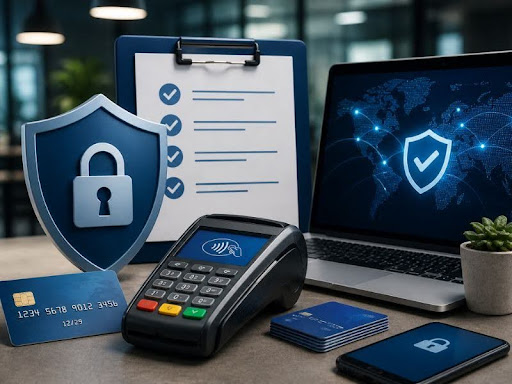
Why PCI Compliance Matters
Here is why this matters in a real business setting.
You are handling sensitive information
Every transaction involves customer financial data. If that data is exposed, your business is held accountable.
Trust affects buying decisions
Customers expect their information to be safe. One security issue can quickly damage that trust.
Non-compliance can be costly
Businesses that fail to meet PCI standards may face fines, penalties, or restrictions on accepting card payments.
Security risks are increasing
Cyber threats continue to evolve. Strong security practices are now part of everyday business operations.
Who Needs to Be PCI Compliant?
Any business that accepts credit or debit card payments must follow PCI standards.
Retail stores using POS systems
E-commerce businesses
Service providers accepting payments over the phone
Mobile businesses using handheld devices
The size of your business does not change the requirement.

What PCI Compliance Involves
You do not need to memorize every technical detail, but these are the core ideas:
Maintain secure systems and networks
Protect cardholder data through encryption
Control access to sensitive information
Monitor and test systems regularly
Follow consistent security practices
It is about building a secure process into your daily operations.
Common Mistakes Businesses Make
Some businesses assume they are compliant when they are not.
Storing card data without proper protection
Using outdated payment systems
Failing to update software
Assuming their provider handles everything
Not training staff on basic security practices
Even with a payment provider, compliance is still a shared responsibility.
How Electronic Commerce International (ECI) Supports Your Business
PCI compliance can feel complex, especially when you are focused on running your business.
Electronic Commerce International (ECI)helps simplify that process.
Founded in 2002, ECI works with small and medium-sized businesses across North America to provide secure and reliable payment solutions.
Security-focused systems
Their payment solutions are designed with compliance in mind, helping reduce risk from the start.
Flexible payment options
From POS systems to mobile processing and online gateways, businesses can accept payments securely across different channels.
Integrated tools
With ECI EZPay and MarketingROI.ai, businesses can manage payments and marketing in one place.
Dedicated support
ECI provides ongoing support to guide businesses through payment processing and compliance needs.
Final Thoughts
PCI compliance is not just a technical requirement.
It is part of running a secure and trustworthy business.
Customers feel confident working with you
Your operations run more smoothly
Your business is better prepared to grow
With the right support, compliance becomes much easier to manage.
Electronic Commerce International (ECI)provides the tools and guidance businesses need to handle payments securely and move forward with confidence.
